
How to track installment purchases and available credit
Learn how to track installment purchases, credit limits, future bills, and personal and business cards to avoid surprises and protect cash flow.
July 17, 2026
To manage installment purchases, record the total amount, number of installments, current installment, card, category, final date, and impact on each future statement. Track total, used, and available credit, along with monthly commitments.
Why is looking only at the current statement not enough?
The current statement shows charges for the period, but not necessarily the total value of existing obligations. A purchase split into twelve installments will continue to affect credit and cash flow for months.
The Central Bank of Brazil notes that using a card carries the responsibility to pay charges by the statement due date. Good management also requires a view of the full payment schedule.
What should you record for each installment purchase?
- Purchase description.
- Total amount.
- Number of installments.
- Amount of each installment.
- Current installment number.
- First and final billing dates.
- Personal or business card.
- Category and responsible person.
How to calculate committed credit
Committed credit is not just the closed statement balance. It includes authorized purchases, future installments, and unprocessed transactions, depending on the issuer's rules.
For internal management, track both credit used today and the total value of existing future installments. This prevents you from confusing available credit with the ability to afford a purchase.
A step-by-step guide to organizing your cards
1. Add every card
Record the holder, personal or business classification, limit, statement closing date, due date, and account used to pay the bill.
2. Import or review the statement
Classify purchases, identify duplicates, and confirm whether each expense belongs to the individual or the business.
3. Allocate installments to future months
Create a timeline through the final installment. This shows when your commitments start to fall.
4. Compare the statement with cash flow
Include every due date in your forecast. A bill may be affordable by itself but become a problem when it coincides with taxes or payroll.
5. Set credit and due-date alerts
Choose warning thresholds, such as 70% or 80% utilization, to suit your business. The key is to act before your purchasing capacity is restricted.
6. Review mixed personal and business spending
Personal purchases on business cards and business purchases on personal cards need to be classified and settled.
An example of the future impact
A business buys R$ 12,000 of equipment in 12 installments of R$ 1,000. The current statement shows only R$ 1,000, but the decision commits another R$ 11,000 in future months. Further purchases without this broader view can put future cash flow under pressure.
How to decide whether installments are worthwhile
- Compare the total cost and interest.
- Check whether the installment is affordable in the weakest forecast month.
- Assess the return on the goods or services purchased.
- Consider the credit needed for operating expenses.
- Avoid paying recurring expenses in installments when those expenses will continue.
How Vinica organizes cards and statements
In Vinica, users can add personal and business cards and track credit used, current bills, available credit, future installments, and alerts. Statements can be sent for analysis and reconciliation, reducing manual work.
Organize your cards before the next statement
Frequently asked questions
Are interest-free installments always better?
Not necessarily. Even without interest, installments commit credit and future cash flow. Consider your ability to pay and your other obligations.
Can I use my personal card for business purchases?
It can happen, but the expense should be recorded as a business expense paid personally and included in reconciliation between the parties.
What percentage of my credit limit is safe to use?
There is no universal percentage. It depends on cash flow, due dates, and operational needs. Internal alerts help prevent overuse.
Summary: Record the full installment cycle, track credit limits and future bills, and connect your cards to the cash forecast. Available credit is not available cash.
Sources and references

We help people managing a business, a family, and a busy life organize everything with greater clarity.
Browse categories

Newsletter
Organize better today. Make clearer decisions tomorrow.
Get practical advice on financial management, cash flow, cards, personal and business finances, AI, and productivity for people managing both a business and a personal life.
USE CODE: BLOGVINICA
Copied

Organize your business and personal life for 33% less.
Get the complete Vinica to manage finances, cards, accounts, documents, and appointments with AI on WhatsApp.



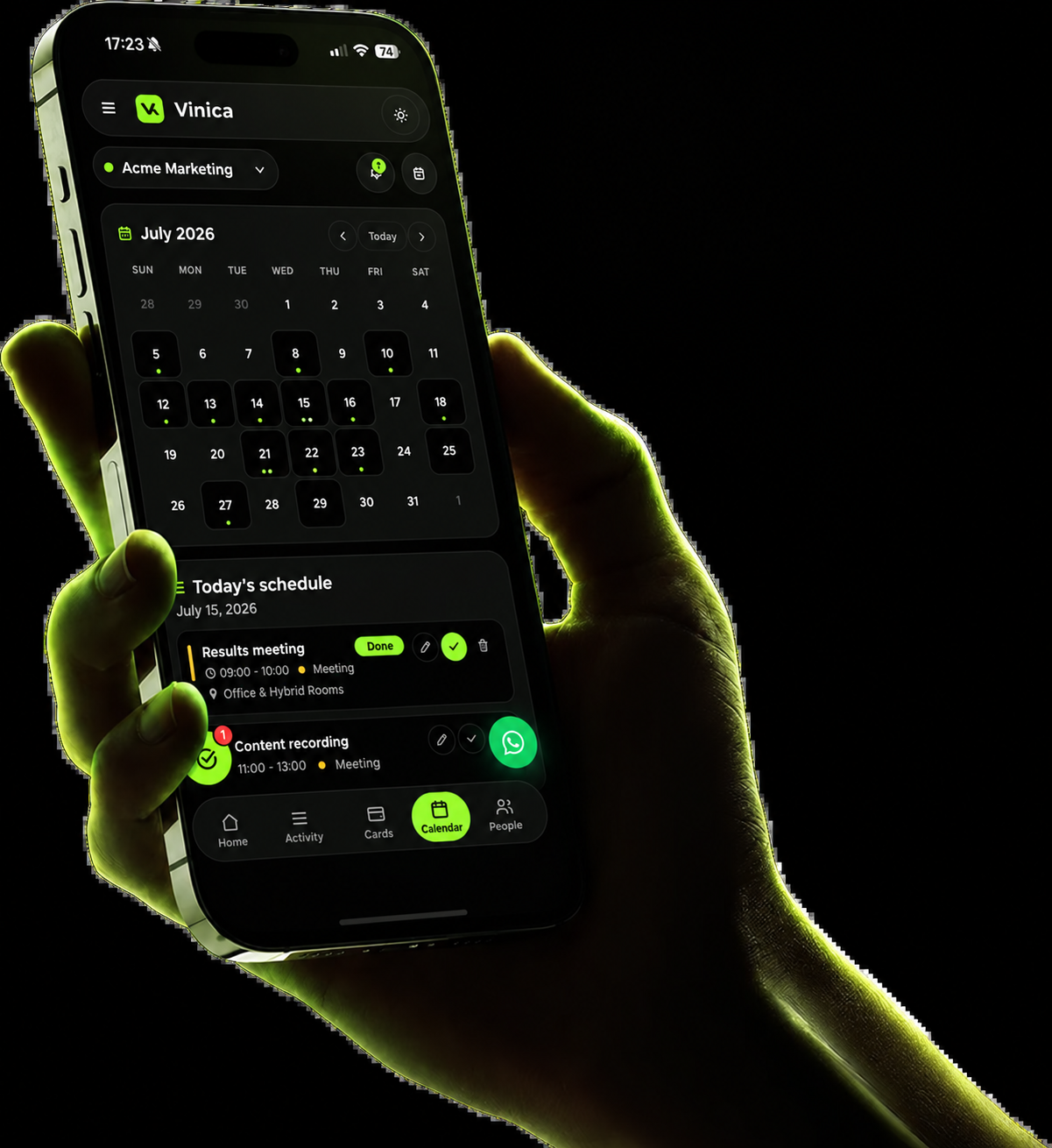
Subscribe to Vinica and organize all your finances today.
Record it on WhatsApp. Track it on your dashboard. Organize your business, family, documents, and daily life with an assistant that sees the whole picture.